
If you are an aspiring aviator in Utah, you’ve likely found yourself paralyzed by a massive decision: Should you enroll in a traditional 4-year university flight program (like those offered at UVU or USU), or should you fast-track your career at a dedicated flight school like Upper Limit Aviation?
For decades, the standard advice was to attend a university because major airlines required a bachelor’s degree. But the aviation industry has undergone a massive shift, and the old rules no longer apply.
If you’re wondering whether pilots need a degree, here is the transparent truth about airline pilot degree requirements in 2026 —and why the smartest financial move might be to skip the university classroom—at least for now.
The short answer is: No. First and foremost, the Federal Aviation Administration (FAA) does not require a college degree for any level of pilot certification, including the Private Pilot License (PPL), Commercial Pilot License (CPL), or the Airline Transport Pilot (ATP) certificate.
But what about the airlines themselves?
Airlines today are far more focused on your flight experience, your safety record, and whether you have accumulated the necessary 1,500 flight hours.
While it is entirely possible to get hired without a diploma, we believe in being completely honest with our students: having a bachelor’s degree does give you a competitive edge. Because major airlines still list a degree as “preferred,” having one on your resume can help you stand out in a crowded applicant pool when applying for a Captain’s seat at a legacy carrier.
However, wanting that competitive edge doesn’t mean you have to subject yourself to four years of college debt before you even touch an airplane’s controls.
When comparing a flight school vs. a college aviation program, the biggest factors are time and money.
You don’t have to choose between flying and getting an education. The most efficient, cost-effective route to a successful aviation career today is “Flight Training First, Online Degree Later.”
Here is how the modern, financially savvy pilot does it:
By the time your peers are graduating from a 4-year university with 250 flight hours and zero income, you could already be flying for a regional airline, earning a professional salary, and finishing up your online degree on your layovers.
The airlines don’t want to see how well you take multiple-choice tests; they want to see how well you fly. Don’t let the lack of a four-year degree keep you grounded.
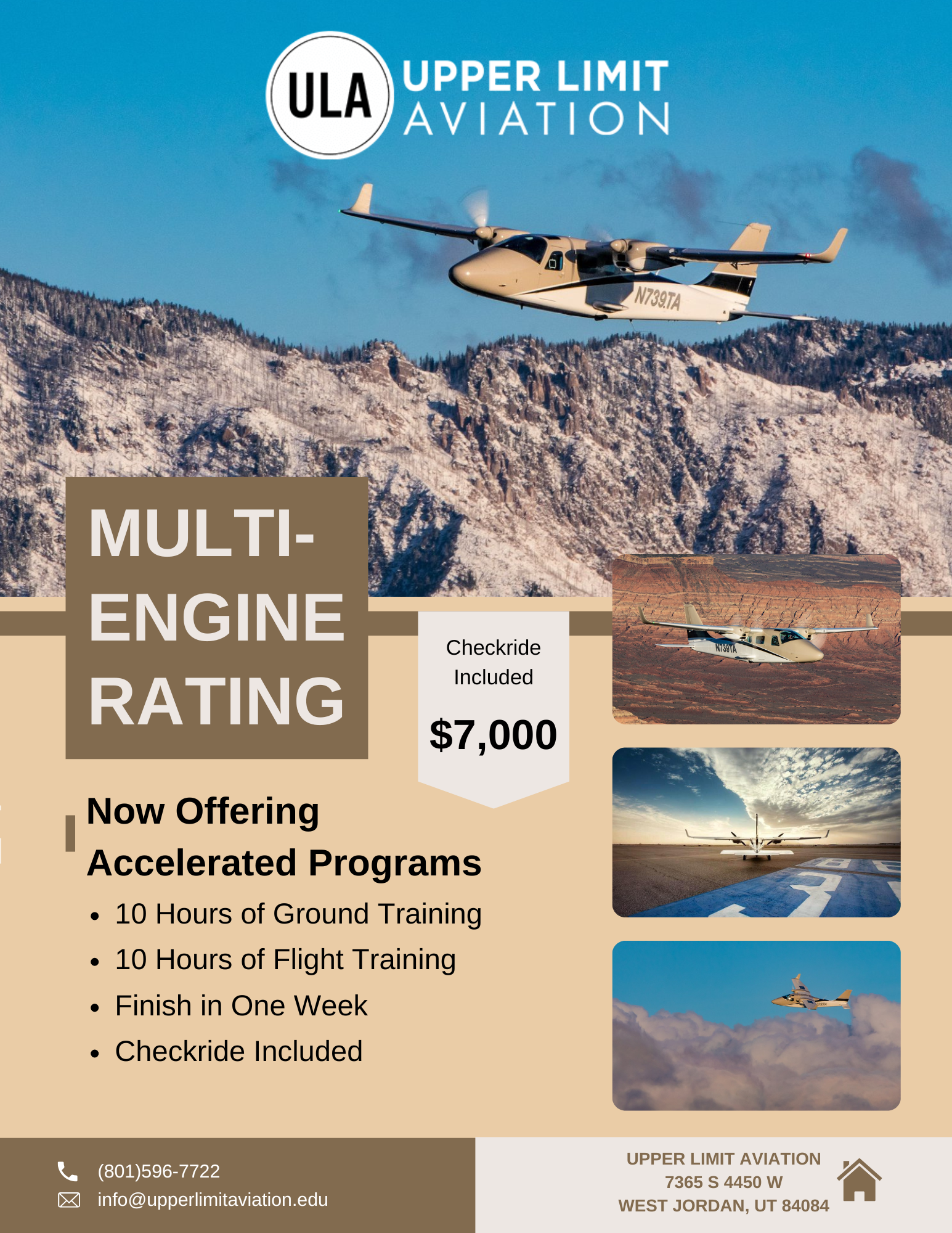
If you are ready to bypass the traditional college waitlist and start logging real flight hours this week, contact Upper Limit Aviation today to schedule your Discovery Flight and see exactly why our accelerated training path is the smartest investment you can make in your future.