SkyWest Airlines
Career Pathway
Certificates, instructor ratings, and paid flight-line hours from SVR to airline minimums. ULA is an FAA-approved pilot school. Published package pricing is Part 61, and an FAA-approved curriculum is available for VA and international students.
Full Pathway
12–24 months
To Instructor
12–18 months
Complete Program From
$46,970
School
FAA-Approved Pilot School
FIG. 01 · Airline Track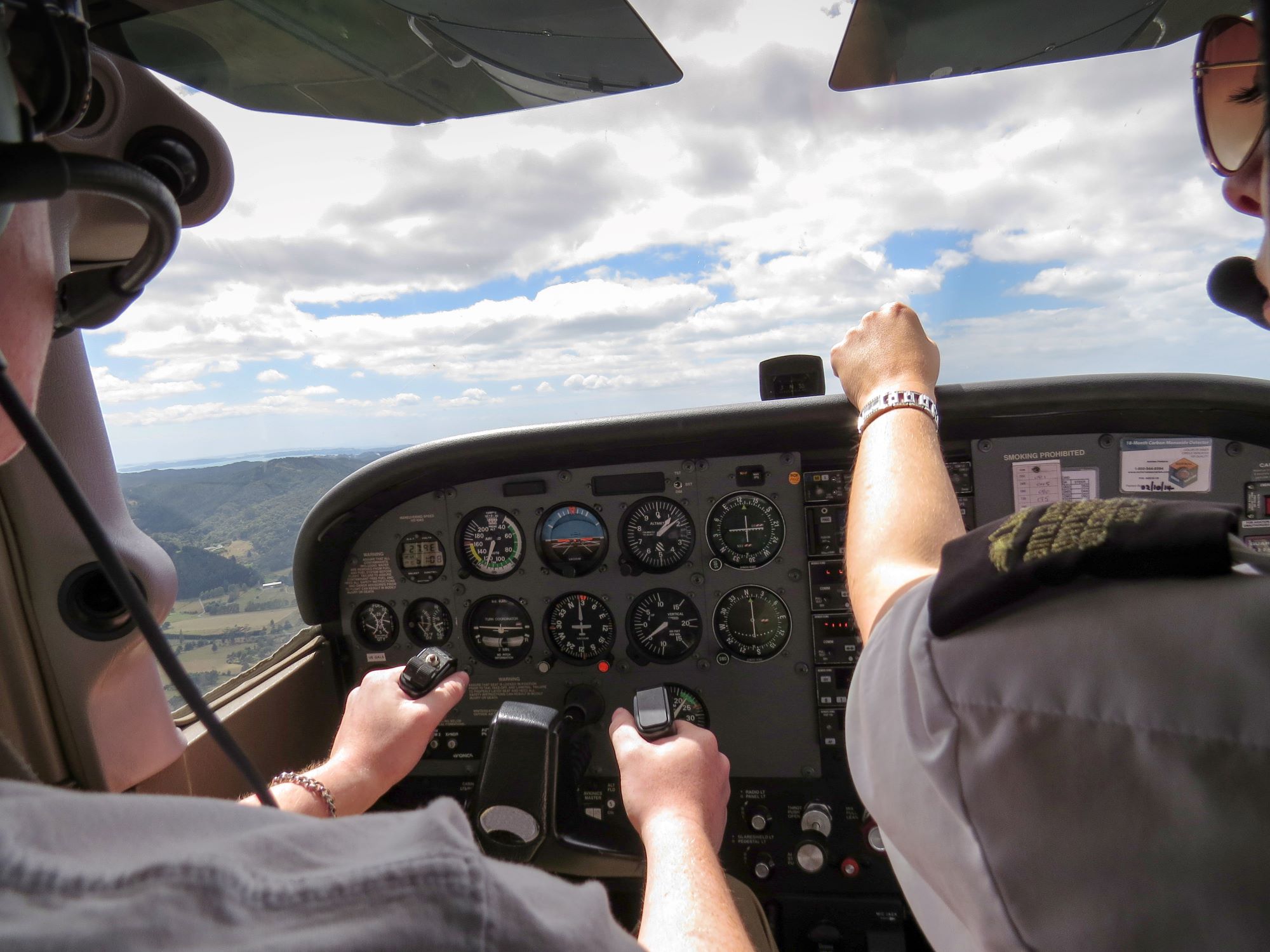
Career Pathway
Seven certificates and ratings in sequence
01
Stick-and-rudder skills, aeronautical knowledge, and judgment for safe VFR flying.
02
IFR clearances, approaches, and the discipline that defines professional pilots.
03
Precision and professionalism for flying for compensation or hire.
04
Commercial Multi-Engine Rating
Twin-engine procedures and systems in the Tecnam P2006T.
05
Certified Flight Instructor (CFI)
Teaching reinforces your skills and starts paid hour building.
06
Certified Flight Instructor – Instrument (CFII)
Instruct in the IFR environment.
07
Complete the instructor portfolio with multi-engine instructing privileges.
FAA-Approved Curriculum
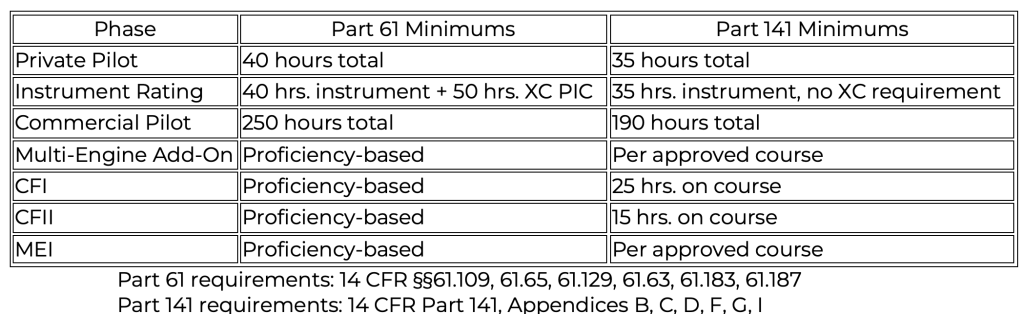
Hour structure and timeline
Published package pricing is Part 61. Eligible students in an FAA-approved curriculum can qualify for a commercial checkride at 190 total hours instead of 250, before instructor training begins.
FAA figures are regulatory minimums. Actual hours depend on frequency, aptitude, and weather. Stage checks confirm readiness before each phase.
Timeline
12–18 months typical
Dedicated students often finish in 12–18 months. Full pathway through MEI typically runs 12–24 months. Availability, training frequency, and weather set your pace.
Complete program from $46,970. Private through CFI, including commercial time build, multi add-on, and 50 simulator hours.
See Financing OptionsAfter Certificates
Instruct, build hours, apply
01
Instruct and build hours
Paid instructing on ULA's flight line. Most career-track pilots build the flight hours airlines and Part 135 operators require through instruction.
02
Reach airline minimums
Structured time building from approximately 250 to 700 hours with mission-based flying and checkride prep.
03
Apply to airlines
Regional carriers are typically the next step. Hours, references, and interview prep from staff who have made the move.
Named airline pathway programs come and go with the market. ULA does not run one. ULA instructors have been hired by SkyWest, Cape Air, Skyshare, NetJets, etc. Ask info@upperlimitaviation.edu where recent graduates and instructors are flying now.
Cadet Programs & Pathways
Explore airline cadet programs and the wider industry
ULA encourages students to explore airline cadet and pathway programs as part of long-term career development. These programs can provide mentorship, industry exposure, hiring visibility, travel benefits, and potential career opportunities as students build flight experience.
Research program requirements, hiring standards, and long-term commitments carefully. Aviation is cyclical: hiring environments, airline growth, economic conditions, and aircraft demand change over time. The goal is adaptable professional aviators—not a single hiring pipeline.
Depending on industry conditions, students may explore opportunities associated with organizations such as the lists below. These are examples for research, not endorsements or guaranteed pathways.
Airlines
Regional and airline pathways
Horizon Air
Frontier Airlines
Mesa Airlines
Republic Airways
Envoy Air
PSA Airlines
GoJet Airlines
Breeze Airways
Cargo & Part 135
Turbine time and real IFR work
Many Part 135, cargo, charter, and corporate operators provide turbine experience, real-world IFR environments, crew coordination, customer service, and professional flight operations.
Ameriflight
Alpine Air
Martinaire
Bemidji Aviation
Key Lime Air
Berry Aviation
Charter, Fractional & Corporate
Not every professional pilot follows the same path
Some organizations offer formal cadet or pathway programs; others hire through competitive processes based on experience, professionalism, instructor recommendations, and flight time. For many pilots these sectors offer long-term stability and advanced turbine flying.
NetJets
Flexjet
PlaneSense
JSX
Contour Airlines
Boutique Air
Southern Airways Express
Cape Air
Medevac & Air Medical
Mission-driven patient transport
Medevac pilots transport patients, medical teams, donor organs, and time-critical equipment—often with hospitals, emergency responders, and critical care professionals.
- Fixed-wing patient transport
- Organ and transplant transport
- Rural and remote medical access flights
- Critical care and specialty transport
Air Methods
Guardian Flight
Life Flight Network
REACH Air Medical Services
PHI Air Medical
Mayo Clinic Ambulance Service
Fixed-Wing Aerial Firefighting
Specialized wildfire aviation
Fixed-wing firefighting supports wildfire suppression, reconnaissance, forest protection, and emergency response. Operations often involve mountain terrain, high density altitude, smoke-restricted visibility, and complex coordination with ground crews.
- Large air tanker and VLAT operations
- SEAT, water scooping, lead plane, and air attack
- Smokejumper, cargo support, and fire reconnaissance
Neptune Aviation Services
10 Tanker Air Carrier
Coulson Aviation
Bridger Aerospace
Conair Group
Billings Flying Service
Aero-Flite
Government & Public Service
Public safety and mission aviation
Government aviation supports public safety, infrastructure, environmental management, emergency response, scientific operations, and law enforcement. Pilots often enter after instruction, military, Part 135, cargo, or specialized turbine experience.
- Law enforcement, border, and coastal surveillance
- Fish and wildlife, forestry, and land management
- Search and rescue, environmental, and scientific flying
Federal Aviation Administration
U.S. Customs and Border Protection
United States Forest Service
National Oceanic and Atmospheric Administration
Civil Air Patrol
Program availability, hiring minimums, and eligibility change frequently. Review official employer sites and plan with instructors and mentors.
Training Pace
Accelerated and paced schedules
About 250 flight hours plus study, simulator, and prep. Often 500+ hours total across the pathway.
Accelerated
Full-time immersion
Train at the school five to six days per week and fly approximately three to four times weekly. Requires preparation, consistency, strong study habits, and a focused schedule.
Paced
Balanced with work and family
For working professionals, parents, military members, and career changers. Stay ahead in ground instruction and FAA written exams while progressing through flight training. Large gaps between lessons can erode flight skills.
Funding: financing options including VA benefits.
Programs
Certificates on the airline track
Commercial pilot, instructor ratings, and time building each have dedicated program pages with requirements and pricing.
FAQ
Airline career questions
Does ULA have an airline partnership?
Airline pathway programs shift year to year across the whole industry. What we can show you is where our people actually go: ULA instructors have been hired by SkyWest, Cape Air, Skyshare, NetJets, etc. We'd rather point to hires than logos.
How long until I'm airline-eligible?
Dedicated students often reach instructor ratings in 12–18 months (full pathway typically 12–24 months), then build to airline minimums while instructing. Timeline depends on how often you fly. Contact info@upperlimitaviation.edu to map yours.
Do airlines care where I trained?
They care about your hours, your record, and your references. High-altitude Utah experience is one item they review.
Should I apply to airline cadet programs?
Many students explore airline cadet and pathway programs independently. Requirements, incentives, and availability change with hiring cycles. Review official airline sites, see cadet programs and pathways, and discuss long-term commitments with instructors and mentors.
Start training
Career-track training starts with the commercial certificate and continues through instructor ratings and structured time building.