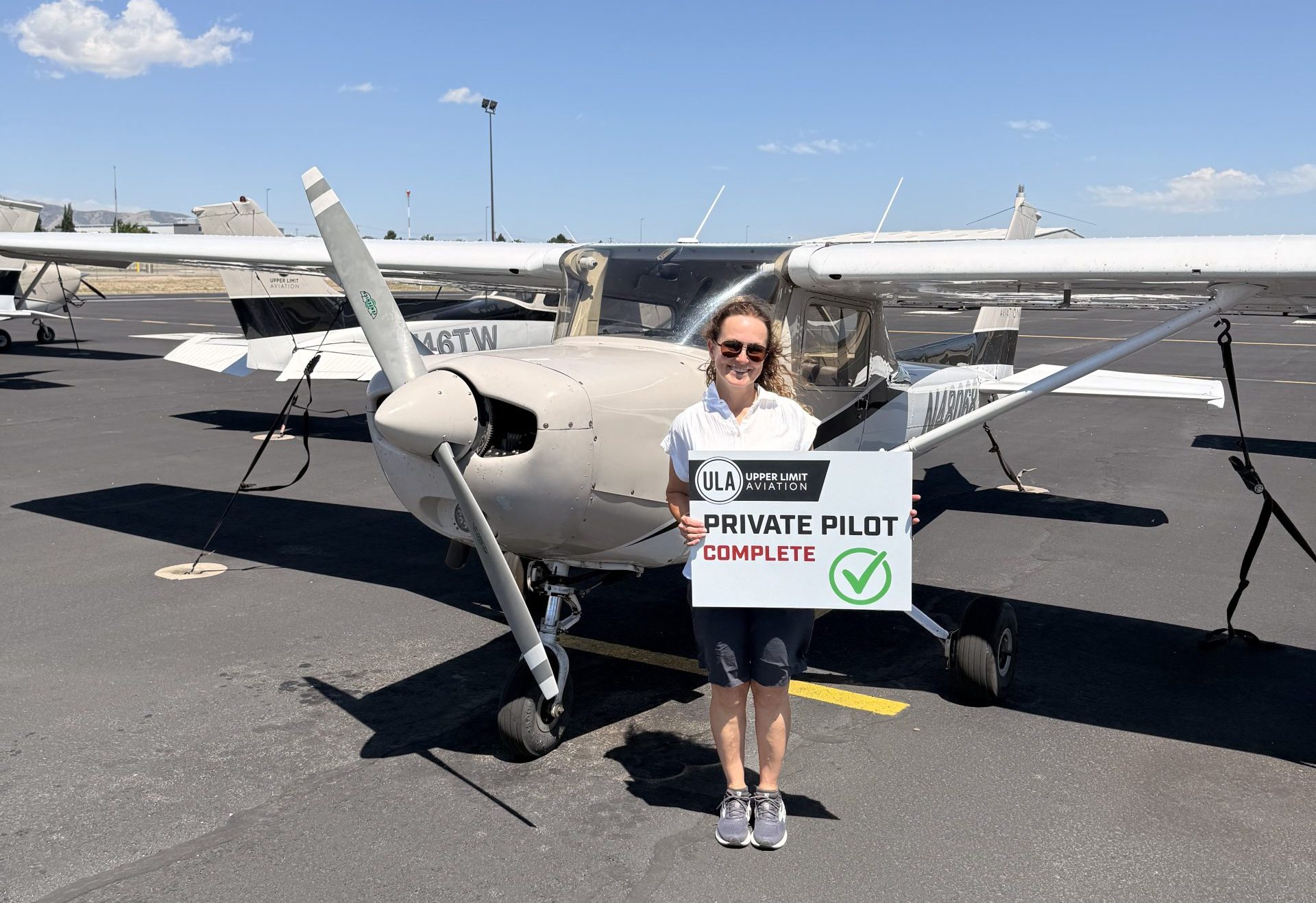
Pilot-in-command
Single-engine aircraft, carry passengers, day or night across the national airspace system.
Discovery flight & enrollment
Meet instructors, confirm eligibility, and start ground school.
Solo and cross-country progression
Build maneuvers, navigation, and decision-making for checkride readiness.
Private pilot checkride
Complete your certificate and plan the next rating.
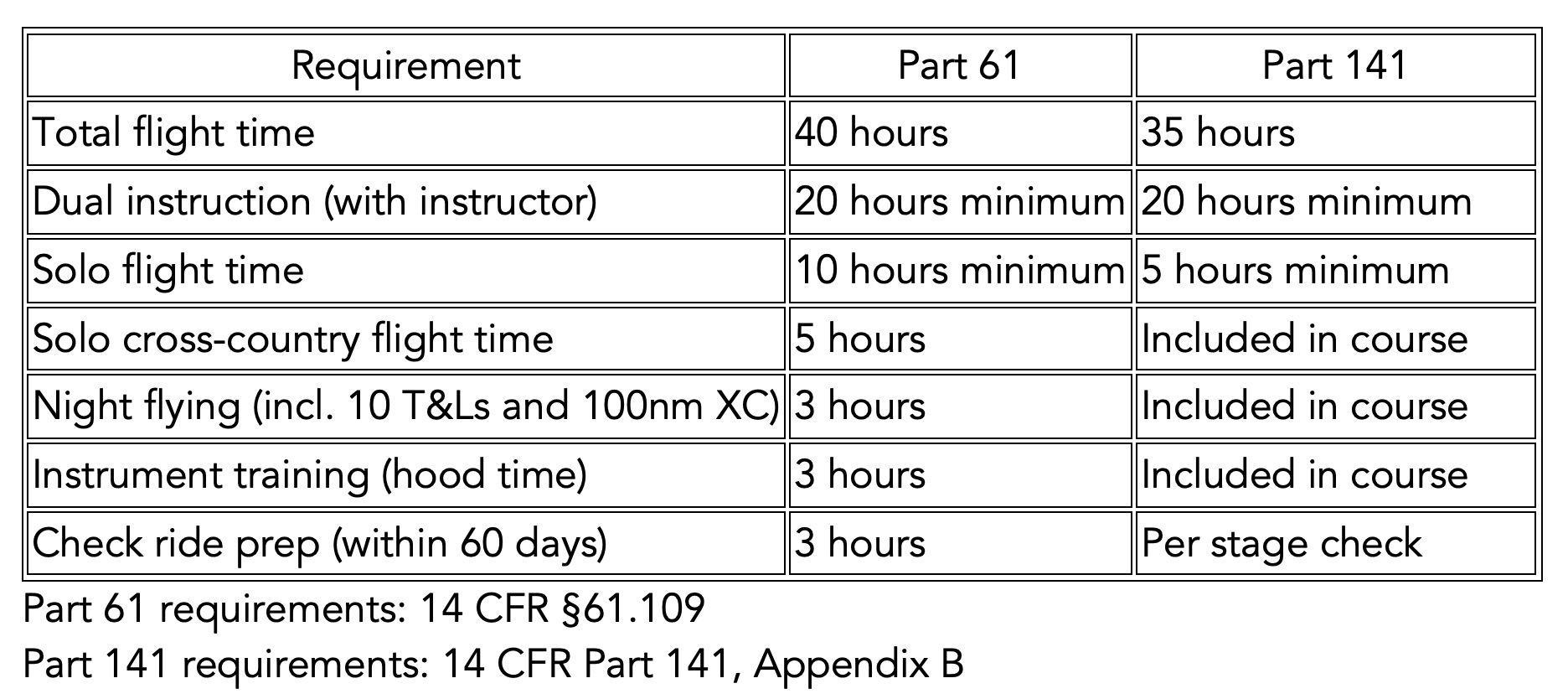
Most students complete training between 55 and 75 hours. FAA minimums are 40 hours in published Part 61 packages and 35 in an FAA-approved curriculum. We train until you are ready, not just legally eligible.
Published package and approved curriculum
Part 61: Most students train this path — more scheduling flexibility, with structured lesson tracking and stage evaluations. The default, including career students.
FAA-approved curriculum: Available for VA and international students who need that format.
Training is in our Cessna fleet. Published package totals on Fleet & Rates are Part 61.
Both paths are FAA-regulated and lead to the same pilot certificates. The difference is structure, flexibility, and minimum hour requirements.
| Feature | Part 61 | FAA-approved curriculum |
|---|---|---|
| Training format | Flexible, instructor-led training pace | FAA-approved syllabus with structured lesson sequence |
| FAA oversight | Standard FAA oversight | Higher oversight with regular audits |
| Commercial minimums | 250 hours | 190 hours |
| Private minimums | 40 hours | 35 hours |
| Typical fit | Most students, including career paths | VA and international students who need an FAA-approved curriculum |
Is one certificate better to employers?
No. A Commercial Pilot Certificate is the same certificate regardless of whether training is through a Part 61 package or an FAA-approved curriculum.
Is ULA an FAA-approved pilot school?
Yes. ULA is an FAA-approved pilot school, and the FAA reviews student records, pass rates, and aircraft maintenance. Published package pricing is Part 61.
Can VA benefits be used for all flight training?
Not necessarily. VA funding depends on eligibility, training type, and current VA rules. See VA benefits on financing for details.
Can students finish in FAA minimum hours?
No guarantee. Many students need more than minimum hours, and consistent training frequency affects progress.
Pilot-in-command
Single-engine aircraft, carry passengers, day or night across the national airspace system.
Preflight and decisions
Weather analysis, go/no-go decision making, and cross-country navigation.
Aircraft and airspace
Systems, traffic pattern operations, and communications in controlled and uncontrolled airspace.
Emergencies and night
Emergency procedures, night flying, and aeronautical knowledge beyond checkride minimums.
Ground knowledge matched to your certificate or rating: Jeppesen online coursework with one-on-one instructor support.
Students access an online scheduling and training management system for syllabus progress, completed lessons, upcoming objectives, and course milestones. Records carry across instructors.
Free · 9:00 a.m. every Saturday
Open to ULA students, students at other schools, prospective pilots, and aviation enthusiasts. No ULA enrollment required.
Topics include written and oral exam prep, weather, navigation, airspace, aircraft systems, cross-country planning, and career pathways.
After the checkride, most students continue to instrument or commercial training. Previous training experience is welcome; we build from where you are.
Discovery flight
Take the controls before you enroll.
Schedule a Discovery FlightCommercial pilot
Instrument and commercial certificates for professional flying.
View Commercial PilotTraining aircraft
Cessna 172 instruction and rental rates at SVR.
View Fleet & RatesAdmissions follows up about medical eligibility, financing, and start date.